English
 Arabic
 French
 Spanish
 Portuguese
 Deutsch
 Turkish
 Dutch
Dutch
 Italiano
 Russian
 Romaian
 Portuguese (Brazil)
 Greek
Greek

Unlock 10% OFF on Functional Analysis Assignments – Limited Time Offer!
Other |
2026-03-31 11:28:00
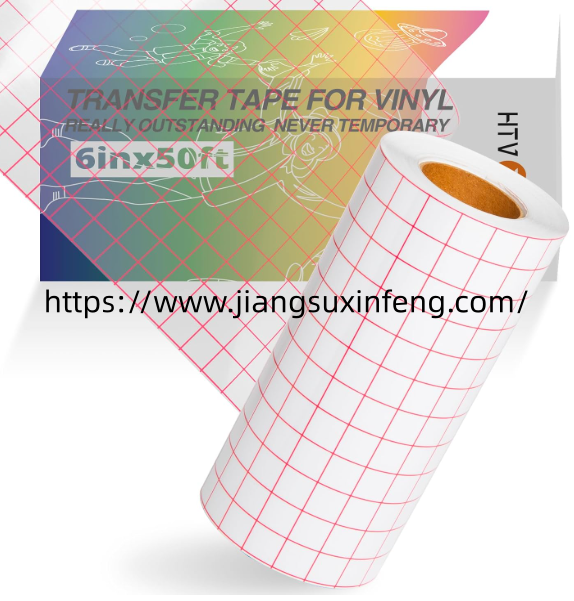
Release Paper plays an essential role in supporting adhesive materials during production processes, acting as a protective and functional layer that enables controlled handling and application. By providing a stable surface with specific release properties, it helps manufacturers manage adhesives from coating to final use without unwanted sticking or contamination.
In many industrial settings, adhesives are applied to substrates that require temporary protection before use. The liner acts as a barrier, preventing premature bonding and allowing materials to be stored, transported, and processed efficiently. This is especially important in products such as labels, tapes, and decorative films, where consistency and cleanliness are necessary for reliable performance.
One of the key aspects of this material is its release coating. Typically treated with silicone or similar substances, the surface is engineered to allow adhesives to separate smoothly when needed. The level of release force can be adjusted depending on the application, ensuring that the adhesive remains secure during processing but can be easily removed during final use. This balance is important for maintaining workflow efficiency.
Another important factor is compatibility with different adhesive systems. Pressure sensitive adhesives, hot melt formulations, and solvent based coatings all have unique characteristics. Selecting a suitable liner helps ensure that the adhesive maintains its intended properties without being affected by the backing material. This compatibility supports consistent results across different production stages.
During coating and converting processes, material stability is critical. The liner must withstand tension, temperature variations, and mechanical stress as it moves through equipment. A stable structure helps reduce issues such as wrinkling or uneven coating, which can affect product quality. This contributes to smoother operation and helps minimize production interruptions.
Surface quality also influences final output. A uniform and clean liner surface supports even adhesive distribution, which is essential for applications that require precise bonding. Irregularities in the base material may transfer to the adhesive layer, potentially affecting appearance or performance. For this reason, manufacturers pay close attention to paper formation and coating consistency.
From a practical perspective, ease of handling is another benefit. Materials that unwind smoothly and maintain consistent release properties can improve efficiency in automated systems. This is particularly valuable in large scale production, where small variations can have a noticeable impact over time.
Xinfeng develops liner materials with attention to coating control and base paper selection, aiming to support a range of adhesive applications. By focusing on stable production methods and material consistency, the company provides solutions that can be integrated into different manufacturing processes without adding unnecessary complexity.
In addition, environmental considerations are becoming more relevant. Manufacturers are exploring ways to optimize material usage and reduce waste, which includes selecting liners that align with process efficiency goals. Proper material choice can contribute to more efficient use of resources while maintaining functional performance.
Overall, the role of liner materials in adhesive processing extends beyond simple separation. It involves supporting each stage of production, from coating to application, while helping maintain product quality and operational efficiency. For more information about material options and technical support, visit https://www.jiangsuxinfeng.com/