English
 Arabic
 French
 Spanish
 Portuguese
 Deutsch
 Turkish
 Dutch
Dutch
 Italiano
 Russian
 Romaian
 Portuguese (Brazil)
 Greek
Greek

How Programming Assignments Help Students Develop Real-World Coding Skills
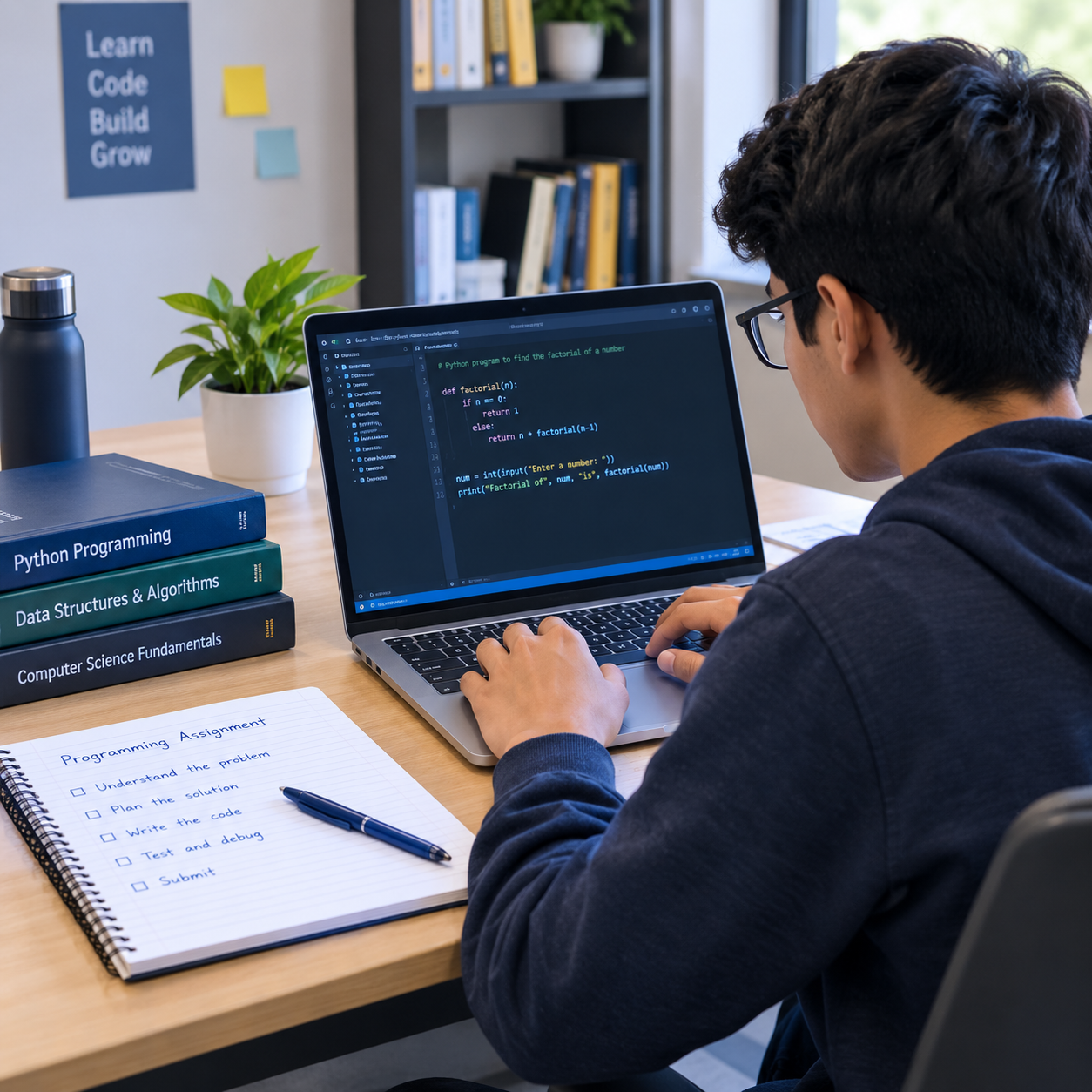
Programming assignments are an important part of modern computer science and information technology education. They give students opportunities to move beyond theoretical concepts and apply programming knowledge to practical problems. By completing coding tasks regularly, students can develop skills that are valuable for both academic success and future careers.
One major benefit of programming assignments is hands-on practice. Classroom lessons may introduce concepts such as variables, functions, loops, data structures, and object-oriented programming, but assignments allow students to use these concepts in realistic situations. Writing and testing code helps students understand how different programming techniques work together to solve problems.
Programming assignments also strengthen problem-solving and logical thinking. Students often need to analyze requirements, divide complex problems into smaller tasks, identify errors, and develop efficient solutions. These abilities are essential in professional software development, where programmers routinely troubleshoot applications and improve existing code.
Debugging is another valuable skill developed through academic programming projects. Encountering errors teaches students how to read error messages, trace problems, test possible solutions, and refine their code. This process encourages patience, accuracy, and independent learning.
When students face challenging coursework, programming assignment help online at https://www.programminghomeworkhelp.com/ can also provide useful academic support. Expert guidance can help learners understand difficult concepts, review coding approaches, identify errors, and improve their problem-solving techniques while keeping learning at the center of the process.
Furthermore, programming assignments can introduce students to practical development habits, including writing readable code, adding comments, testing programs, and organizing projects effectively. Group assignments may also develop communication and collaboration skills.
Overall, programming assignments connect classroom theory with practical coding experience. They prepare students to approach programming challenges systematically and build a stronger foundation for advanced courses, internships, and future technology careers.
Programming assignments are an important part of modern computer science and information technology education. They give students opportunities to move beyond theoretical concepts and apply programming knowledge to practical problems. By completing coding tasks regularly, students can develop skills that are valuable for both academic success and future careers.
One major benefit of programming assignments is hands-on practice. Classroom lessons may introduce concepts such as variables, functions, loops, data structures, and object-oriented programming, but assignments allow students to use these concepts in realistic situations. Writing and testing code helps students understand how different programming techniques work together to solve problems.
Programming assignments also strengthen problem-solving and logical thinking. Students often need to analyze requirements, divide complex problems into smaller tasks, identify errors, and develop efficient solutions. These abilities are essential in professional software development, where programmers routinely troubleshoot applications and improve existing code.
Debugging is another valuable skill developed through academic programming projects. Encountering errors teaches students how to read error messages, trace problems, test possible solutions, and refine their code. This process encourages patience, accuracy, and independent learning.
When students face challenging coursework, programming assignment help online at https://www.programminghomeworkhelp.com/ can also provide useful academic support. Expert guidance can help learners understand difficult concepts, review coding approaches, identify errors, and improve their problem-solving techniques while keeping learning at the center of the process.
Furthermore, programming assignments can introduce students to practical development habits, including writing readable code, adding comments, testing programs, and organizing projects effectively. Group assignments may also develop communication and collaboration skills.
Overall, programming assignments connect classroom theory with practical coding experience. They prepare students to approach programming challenges systematically and build a stronger foundation for advanced courses, internships, and future technology careers.
How Programming Assignments Help Students Develop Real-World Coding Skills
Programming assignments are an important part of modern computer science and information technology education. They give students opportunities to move beyond theoretical concepts and apply programming knowledge to practical problems. By completing coding tasks regularly, students can develop skills that are valuable for both academic success and future careers.
One major benefit of programming assignments is hands-on practice. Classroom lessons may introduce concepts such as variables, functions, loops, data structures, and object-oriented programming, but assignments allow students to use these concepts in realistic situations. Writing and testing code helps students understand how different programming techniques work together to solve problems.
Programming assignments also strengthen problem-solving and logical thinking. Students often need to analyze requirements, divide complex problems into smaller tasks, identify errors, and develop efficient solutions. These abilities are essential in professional software development, where programmers routinely troubleshoot applications and improve existing code.
Debugging is another valuable skill developed through academic programming projects. Encountering errors teaches students how to read error messages, trace problems, test possible solutions, and refine their code. This process encourages patience, accuracy, and independent learning.
When students face challenging coursework, programming assignment help online at https://www.programminghomeworkhelp.com/ can also provide useful academic support. Expert guidance can help learners understand difficult concepts, review coding approaches, identify errors, and improve their problem-solving techniques while keeping learning at the center of the process.
Furthermore, programming assignments can introduce students to practical development habits, including writing readable code, adding comments, testing programs, and organizing projects effectively. Group assignments may also develop communication and collaboration skills.
Overall, programming assignments connect classroom theory with practical coding experience. They prepare students to approach programming challenges systematically and build a stronger foundation for advanced courses, internships, and future technology careers.
·1K Views
·0 Anteprima